/* Custom style for animate.css. Lines 1-17 moved to frontend/_animate.scss */ @keyframes bounce { from, 20%, 53%, 80%, to { animation-timing-function: cubic-bezier(0.215, 0.610, 0.355, 1.000); transform: translate3d(0,0,0); } 40%, 43% { animation-timing-function: cubic-bezier(0.755, 0.050, 0.855, 0.060); transform: translate3d(0, -30px, 0); } 70% { animation-timing-function: cubic-bezier(0.755, 0.050, 0.855, 0.060); transform: translate3d(0, -15px, 0); } 90% { transform: translate3d(0,-4px,0); } } .bounce { animation-name: bounce; transform-origin: center bottom; } @keyframes flash { from, 50%, to { opacity: 1; } 25%, 75% { opacity: 0; } } .flash { animation-name: flash; } /* originally authored by Nick Pettit - https://github.com/nickpettit/glide */ @keyframes pulse { from { transform: scale3d(1, 1, 1); } 50% { transform: scale3d(1.05, 1.05, 1.05); } to { transform: scale3d(1, 1, 1); } } .pulse { animation-name: pulse; } @keyframes rubberBand { from { transform: scale3d(1, 1, 1); } 30% { transform: scale3d(1.25, 0.75, 1); } 40% { transform: scale3d(0.75, 1.25, 1); } 50% { transform: scale3d(1.15, 0.85, 1); } 65% { transform: scale3d(.95, 1.05, 1); } 75% { transform: scale3d(1.05, .95, 1); } to { transform: scale3d(1, 1, 1); } } .rubberBand { animation-name: rubberBand; } @keyframes shake { from, to { transform: translate3d(0, 0, 0); } 10%, 30%, 50%, 70%, 90% { transform: translate3d(-10px, 0, 0); } 20%, 40%, 60%, 80% { transform: translate3d(10px, 0, 0); } } .shake { animation-name: shake; } @keyframes headShake { 0% { transform: translateX(0); } 6.5% { transform: translateX(-6px) rotateY(-9deg); } 18.5% { transform: translateX(5px) rotateY(7deg); } 31.5% { transform: translateX(-3px) rotateY(-5deg); } 43.5% { transform: translateX(2px) rotateY(3deg); } 50% { transform: translateX(0); } } .headShake { animation-timing-function: ease-in-out; animation-name: headShake; } @keyframes swing { 20% { transform: rotate3d(0, 0, 1, 15deg); } 40% { transform: rotate3d(0, 0, 1, -10deg); } 60% { transform: rotate3d(0, 0, 1, 5deg); } 80% { transform: rotate3d(0, 0, 1, -5deg); } to { transform: rotate3d(0, 0, 1, 0deg); } } .swing { transform-origin: top center; animation-name: swing; } @keyframes tada { from { transform: scale3d(1, 1, 1); } 10%, 20% { transform: scale3d(.9, .9, .9) rotate3d(0, 0, 1, -3deg); } 30%, 50%, 70%, 90% { transform: scale3d(1.1, 1.1, 1.1) rotate3d(0, 0, 1, 3deg); } 40%, 60%, 80% { transform: scale3d(1.1, 1.1, 1.1) rotate3d(0, 0, 1, -3deg); } to { transform: scale3d(1, 1, 1); } } .tada { animation-name: tada; } /* originally authored by Nick Pettit - https://github.com/nickpettit/glide */ @keyframes wobble { from { transform: none; } 15% { transform: translate3d(-25%, 0, 0) rotate3d(0, 0, 1, -5deg); } 30% { transform: translate3d(20%, 0, 0) rotate3d(0, 0, 1, 3deg); } 45% { transform: translate3d(-15%, 0, 0) rotate3d(0, 0, 1, -3deg); } 60% { transform: translate3d(10%, 0, 0) rotate3d(0, 0, 1, 2deg); } 75% { transform: translate3d(-5%, 0, 0) rotate3d(0, 0, 1, -1deg); } to { transform: none; } } .wobble { animation-name: wobble; } @keyframes jello { from, 11.1%, to { transform: none; } 22.2% { transform: skewX(-12.5deg) skewY(-12.5deg); } 33.3% { transform: skewX(6.25deg) skewY(6.25deg); } 44.4% { transform: skewX(-3.125deg) skewY(-3.125deg); } 55.5% { transform: skewX(1.5625deg) skewY(1.5625deg); } 66.6% { transform: skewX(-0.78125deg) skewY(-0.78125deg); } 77.7% { transform: skewX(0.390625deg) skewY(0.390625deg); } 88.8% { transform: skewX(-0.1953125deg) skewY(-0.1953125deg); } } .jello { animation-name: jello; transform-origin: center; } @keyframes bounceIn { from, 20%, 40%, 60%, 80%, to { animation-timing-function: cubic-bezier(0.215, 0.610, 0.355, 1.000); } 0% { opacity: 0; transform: scale3d(.3, .3, .3); } 20% { transform: scale3d(1.1, 1.1, 1.1); } 40% { transform: scale3d(.9, .9, .9); } 60% { opacity: 1; transform: scale3d(1.03, 1.03, 1.03); } 80% { transform: scale3d(.97, .97, .97); } to { opacity: 1; transform: scale3d(1, 1, 1); } } .bounceIn { animation-name: bounceIn; } @keyframes bounceInDown { from, 60%, 75%, 90%, to { animation-timing-function: cubic-bezier(0.215, 0.610, 0.355, 1.000); } 0% { opacity: 0; transform: translate3d(0, -3000px, 0); } 60% { opacity: 1; transform: translate3d(0, 25px, 0); } 75% { transform: translate3d(0, -10px, 0); } 90% { transform: translate3d(0, 5px, 0); } to { transform: none; } } .bounceInDown { animation-name: bounceInDown; } @keyframes bounceInLeft { from, 60%, 75%, 90%, to { animation-timing-function: cubic-bezier(0.215, 0.610, 0.355, 1.000); } 0% { opacity: 0; transform: translate3d(-3000px, 0, 0); } 60% { opacity: 1; transform: translate3d(25px, 0, 0); } 75% { transform: translate3d(-10px, 0, 0); } 90% { transform: translate3d(5px, 0, 0); } to { transform: none; } } .bounceInLeft { animation-name: bounceInLeft; } @keyframes bounceInRight { from, 60%, 75%, 90%, to { animation-timing-function: cubic-bezier(0.215, 0.610, 0.355, 1.000); } from { opacity: 0; transform: translate3d(3000px, 0, 0); } 60% { opacity: 1; transform: translate3d(-25px, 0, 0); } 75% { transform: translate3d(10px, 0, 0); } 90% { transform: translate3d(-5px, 0, 0); } to { transform: none; } } .bounceInRight { animation-name: bounceInRight; } @keyframes bounceInUp { from, 60%, 75%, 90%, to { animation-timing-function: cubic-bezier(0.215, 0.610, 0.355, 1.000); } from { opacity: 0; transform: translate3d(0, 3000px, 0); } 60% { opacity: 1; transform: translate3d(0, -20px, 0); } 75% { transform: translate3d(0, 10px, 0); } 90% { transform: translate3d(0, -5px, 0); } to { transform: translate3d(0, 0, 0); } } .bounceInUp { animation-name: bounceInUp; } @keyframes fadeIn { from { opacity: 0; } to { opacity: 1; } } .fadeIn { animation-name: fadeIn; } @keyframes fadeInDown { from { opacity: 0; transform: translate3d(0, -100%, 0); } to { opacity: 1; transform: none; } } .fadeInDown { animation-name: fadeInDown; } @keyframes fadeInLeft { from { opacity: 0; transform: translate3d(-100%, 0, 0); } to { opacity: 1; transform: none; } } .fadeInLeft { animation-name: fadeInLeft; } @keyframes fadeInRight { from { opacity: 0; transform: translate3d(100%, 0, 0); } to { opacity: 1; transform: none; } } .fadeInRight { animation-name: fadeInRight; } @keyframes fadeInUp { from { opacity: 0; transform: translate3d(0, 100%, 0); } to { opacity: 1; transform: none; } } .fadeInUp { animation-name: fadeInUp; } @keyframes lightSpeedIn { from { transform: translate3d(100%, 0, 0) skewX(-30deg); opacity: 0; } 60% { transform: skewX(20deg); opacity: 1; } 80% { transform: skewX(-5deg); opacity: 1; } to { transform: none; opacity: 1; } } .lightSpeedIn { animation-name: lightSpeedIn; animation-timing-function: ease-out; } @keyframes rotateIn { from { transform-origin: center; transform: rotate3d(0, 0, 1, -200deg); opacity: 0; } to { transform-origin: center; transform: none; opacity: 1; } } .rotateIn { animation-name: rotateIn; } @keyframes rotateInDownLeft { from { transform-origin: left bottom; transform: rotate3d(0, 0, 1, -45deg); opacity: 0; } to { transform-origin: left bottom; transform: none; opacity: 1; } } .rotateInDownLeft { animation-name: rotateInDownLeft; } @keyframes rotateInDownRight { from { transform-origin: right bottom; transform: rotate3d(0, 0, 1, 45deg); opacity: 0; } to { transform-origin: right bottom; transform: none; opacity: 1; } } .rotateInDownRight { animation-name: rotateInDownRight; } @keyframes rotateInUpLeft { from { transform-origin: left bottom; transform: rotate3d(0, 0, 1, 45deg); opacity: 0; } to { transform-origin: left bottom; transform: none; opacity: 1; } } .rotateInUpLeft { animation-name: rotateInUpLeft; } @keyframes rotateInUpRight { from { transform-origin: right bottom; transform: rotate3d(0, 0, 1, -90deg); opacity: 0; } to { transform-origin: right bottom; transform: none; opacity: 1; } } .rotateInUpRight { animation-name: rotateInUpRight; } /* originally authored by Nick Pettit - https://github.com/nickpettit/glide */ @keyframes rollIn { from { opacity: 0; transform: translate3d(-100%, 0, 0) rotate3d(0, 0, 1, -120deg); } to { opacity: 1; transform: none; } } .rollIn { animation-name: rollIn; } @keyframes zoomIn { from { opacity: 0; transform: scale3d(.3, .3, .3); } 50% { opacity: 1; } } .zoomIn { animation-name: zoomIn; } @keyframes zoomInDown { from { opacity: 0; transform: scale3d(.1, .1, .1) translate3d(0, -1000px, 0); animation-timing-function: cubic-bezier(0.550, 0.055, 0.675, 0.190); } 60% { opacity: 1; transform: scale3d(.475, .475, .475) translate3d(0, 60px, 0); animation-timing-function: cubic-bezier(0.175, 0.885, 0.320, 1); } } .zoomInDown { animation-name: zoomInDown; } @keyframes zoomInLeft { from { opacity: 0; transform: scale3d(.1, .1, .1) translate3d(-1000px, 0, 0); animation-timing-function: cubic-bezier(0.550, 0.055, 0.675, 0.190); } 60% { opacity: 1; transform: scale3d(.475, .475, .475) translate3d(10px, 0, 0); animation-timing-function: cubic-bezier(0.175, 0.885, 0.320, 1); } } .zoomInLeft { animation-name: zoomInLeft; } @keyframes zoomInRight { from { opacity: 0; transform: scale3d(.1, .1, .1) translate3d(1000px, 0, 0); animation-timing-function: cubic-bezier(0.550, 0.055, 0.675, 0.190); } 60% { opacity: 1; transform: scale3d(.475, .475, .475) translate3d(-10px, 0, 0); animation-timing-function: cubic-bezier(0.175, 0.885, 0.320, 1); } } .zoomInRight { animation-name: zoomInRight; } @keyframes zoomInUp { from { opacity: 0; transform: scale3d(.1, .1, .1) translate3d(0, 1000px, 0); animation-timing-function: cubic-bezier(0.550, 0.055, 0.675, 0.190); } 60% { opacity: 1; transform: scale3d(.475, .475, .475) translate3d(0, -60px, 0); animation-timing-function: cubic-bezier(0.175, 0.885, 0.320, 1); } } .zoomInUp { animation-name: zoomInUp; } @keyframes slideInDown { from { transform: translate3d(0, -100%, 0); visibility: visible; } to { transform: translate3d(0, 0, 0); } } .slideInDown { animation-name: slideInDown; } @keyframes slideInLeft { from { transform: translate3d(-100%, 0, 0); visibility: visible; } to { transform: translate3d(0, 0, 0); } } .slideInLeft { animation-name: slideInLeft; } @keyframes slideInRight { from { transform: translate3d(100%, 0, 0); visibility: visible; } to { transform: translate3d(0, 0, 0); } } .slideInRight { animation-name: slideInRight; } @keyframes slideInUp { from { transform: translate3d(0, 100%, 0); visibility: visible; } to { transform: translate3d(0, 0, 0); } } .slideInUp { animation-name: slideInUp; } {"content":[{"id":"8e94176","elType":"section","settings":{"content_width":{"unit":"px","size":740},"gap":"wider","custom_height":{"unit":"vh","size":100},"content_position":"middle","background_background":"video","background_video_link":"https:\/\/youtu.be\/DsYNaw4qoJw","background_overlay_background":"classic","background_overlay_color":"#000000","background_overlay_color_b":"#9d56c9","background_overlay_gradient_angle":{"unit":"deg","size":270},"padding":{"unit":"px","top":"0","right":"0","bottom":"0","left":"0","isLinked":false},"background_overlay_opacity":{"unit":"px","size":0.29},"height":"min-height","custom_height_mobile":{"unit":"vh","size":100},"background_video_fallback":{"url":"https:\/\/library.elementor.com\/wp-content\/uploads\/2018\/05\/background-Fallback-404.1.jpg","id":8572}},"elements":[{"id":"6e18aaf6","elType":"column","settings":{"_column_size":100,"_inline_size":null,"padding_mobile":{"unit":"px","top":"15","right":"15","bottom":"15","left":"15","isLinked":true}},"elements":[{"id":"36333044","elType":"widget","settings":{"title":"404","header_size":"p","align":"center","title_color":"#ffffff","typography_typography":"custom","typography_font_size":{"unit":"px","size":249},"typography_font_weight":"bold","typography_font_size_tablet":{"unit":"px","size":200},"typography_font_size_mobile":{"unit":"px","size":160}},"elements":[],"widgetType":"heading"},{"id":"737f2c7b","elType":"widget","settings":{"title":"The page you were looking for couldn't be found","header_size":"h3","align":"center","title_color":"#ffffff","typography_typography":"custom","typography_font_size":{"unit":"px","size":39},"typography_font_weight":"300","typography_text_transform":"capitalize","typography_font_size_tablet":{"unit":"px","size":40},"typography_font_size_mobile":{"unit":"px","size":20},"typography_line_height_tablet":{"unit":"px","size":50},"typography_line_height_mobile":{"unit":"px","size":25}},"elements":[],"widgetType":"heading"},{"id":"7fe5f44","elType":"widget","settings":{"icon":"fa fa-font-awesome","primary_color":"#ffffff","_margin":{"unit":"px","top":"60","right":"0","bottom":"60","left":"0","isLinked":false},"size":{"unit":"px","size":60},"_margin_mobile":{"unit":"px","top":"25","right":"0","bottom":"25","left":"0","isLinked":false}},"elements":[],"widgetType":"icon"},{"id":"62b0497c","elType":"widget","settings":{"icon_list":[{"text":"Home Page","icon":"fa fa-angle-right","_id":"f9100b7","link":{"url":"","is_external":"","nofollow":""}},{"text":"Services","icon":"fa fa-angle-right","_id":"6e554ae","link":{"url":"","is_external":"","nofollow":""}},{"text":"About","icon":"fa fa-angle-right","_id":"0816417","link":{"url":"","is_external":"","nofollow":""}},{"text":"Blog","icon":"fa fa-angle-right","_id":"d8c317a","link":{"url":"","is_external":"","nofollow":""}},{"text":"Contact Us","icon":"fa fa-angle-right","_id":"123a835","link":{"url":"","is_external":"","nofollow":""}}],"space_between":{"unit":"px","size":13},"icon_color":"#ffffff","text_indent":{"unit":"px","size":10},"icon_typography_typography":"custom","icon_typography_font_size":{"unit":"px","size":16},"_margin":{"unit":"px","top":"30","right":"0","bottom":"0","left":"0","isLinked":false},"view":"inline","icon_align":"center","text_color":"#ffffff","icon_typography_font_weight":"500","icon_typography_text_transform":"uppercase","icon_typography_font_size_tablet":{"unit":"px","size":16},"icon_typography_font_size_mobile":{"unit":"px","size":14},"icon_typography_line_height_mobile":{"unit":"px","size":29}},"elements":[],"widgetType":"icon-list"}],"isInner":false}],"isInner":false}],"page_settings":[]} DigiMarCon Latam- Digital Marketing, Media and Advertising Conference & ExhibitionComment le Design des Plateformes Favorise le Jeu Compulsif
 
Miami, FL
HYATT REGENCY MIAMI
JUNE 16 - 17, 2025
 
DOWNLOAD BROCHURE

Comment le Design des Plateformes Favorise le Jeu Compulsif

March 29, 2026
Roy Pepito

Comment le Design des Plateformes Favorise le Jeu Compulsif

Les plateformes de jeu en ligne ne sont pas conçues par hasard. Chaque élément visuel, sonore et fonctionnel répond à une stratégie minutieuse visant à maximiser l’engagement des joueurs. Derrière l’interface séduisante se cachent des mécanismes psychologiques puissants qui peuvent transformer une simple session de jeu en comportement compulsif. Nous avons analysé les techniques de design les plus courantes pour comprendre comment elles influencent nos décisions et pourquoi certains joueurs perdent le contrôle. Cette compréhension devient essentielle pour jouer de manière responsable et éviter les pièges invisibles tendus par l’industrie du gaming.

Les Mécanismes Psychologiques Exploités par le Design

Les concepteurs de plateformes maîtrisent parfaitement les leviers psychologiques qui gouvernent notre cerveau. Ils exploitent notamment notre système de récompense pour créer des boucles d’engagement difficiles à briser.

Le cerveau humain réagit instinctivement aux stimuli visuels et auditifs associés aux gains potentiels. Cette réaction n’est pas consciente mais biologique, ce qui rend la résistance particulièrement difficile sans une prise de conscience active.

Les Couleurs et les Sons qui Stimulent la Dopamine

Les palettes chromatiques utilisées par les casinos en ligne ne sont jamais aléatoires. Le rouge et l’or dominent car ils évoquent l’excitation et le luxe, créant une atmosphère propice aux décisions impulsives.

Effets des stimuli sensoriels sur le cerveau :

  • Sons aigus lors des gains : déclenchent une libération immédiate de dopamine, créant une association positive
  • Animations lumineuses : attirent l’attention sur les machines à forte marge pour l’opérateur
  • Musique d’ambiance rythmée : accélère le rythme de jeu et réduit la réflexion critique
  • Effets visuels lors des quasi-gains : activent les mêmes zones cérébrales qu’une victoire réelle

Ces stimuli fonctionnent même quand nous perdons. Un symbole qui manque de peu pour compléter une ligne gagnante produit presque autant de dopamine qu’un gain réel, nous poussant à continuer en pensant que la victoire est “proche”.

L’Absence de Repères Temporels et Spatiaux

Les casinos physiques ont longtemps utilisé l’absence d’horloges et de fenêtres pour désorienter les joueurs. Les plateformes en ligne ont perfectionné cette technique en créant des environnements totalement immersifs.

Quand nous jouons en ligne, rien ne nous rappelle le passage du temps. Pas de changement de lumière naturelle, pas de repas servis à heures fixes, pas de fermeture de l’établissement. Cette absence de repères temporels nous plonge dans un état de “flux” où les heures filent sans que nous en ayons conscience.

Caractéristiques qui favorisent la perte de repères :

Élément de designImpact psychologiqueConséquence comportementale
Interface sans horloge visible Perte de notion du temps Sessions prolongées involontairement
Pas de rappel de durée de jeu Déconnexion de la réalité Incapacité à estimer le temps passé
Design immersif plein écran Isolation sensorielle Oubli des responsabilités quotidiennes
Navigation fluide sans interruption État de transe légère Automatisation des actions de jeu

Cette désorientation temporelle nous empêche d’évaluer rationnellement nos pertes et notre temps investi. Quand nous réalisons finalement combien de temps s’est écoulé, il est souvent trop tard.

Les Récompenses Variables et l’Effet de Quasi-Gain

Le système de récompenses variables constitue le cœur même de l’addiction au jeu. Contrairement aux récompenses fixes, les gains imprévisibles maintiennent notre cerveau dans un état d’anticipation constant.

Les machines à sous utilisent ce qu’on appelle le “renforcement intermittent”, identifié par le psychologue B.F. Skinner comme le type de conditionnement le plus résistant à l’extinction. Même après des dizaines de pertes consécutives, nous continuons à jouer car notre cerveau reste persuadé que le gain suivant peut arriver à tout moment.

L’effet de quasi-gain amplifie ce mécanisme. Quand les rouleaux s’arrêtent avec deux symboles identiques et un troisième légèrement décalé, notre cerveau interprète cela comme “presque gagné” plutôt que comme une perte nette. Cette perception erronée stimule la même région cérébrale qu’une victoire réelle.

Exemples de récompenses variables manipulatrices :

  • Tours gratuits accordés de manière aléatoire après des séries de pertes
  • Petits gains fréquents inférieurs à la mise initiale, présentés comme des victoires
  • Jackpots progressifs affichés en temps réel pour maintenir l’espoir
  • Symboles “Wild” ou “Scatter” qui apparaissent presque régulièrement

Sur les plateformes comme le meilleur casino sans vérification, cette accessibilité immédiate sans processus de vérification compliqué peut amplifier ces mécanismes en éliminant les barrières naturelles qui nous donnent le temps de réfléchir.

Les Fonctionnalités qui Encouragent le Jeu Continu

Les plateformes modernes intègrent des fonctionnalités spécifiquement conçues pour éliminer les pauses naturelles qui nous permettraient de reprendre nos esprits.

L’Auto-Play et les Mises Rapides

Le mode auto-play représente l’une des innovations les plus dangereuses du jeu en ligne. Cette fonctionnalité permet de programmer des centaines de tours consécutifs sans intervention manuelle, créant une distanciation psychologique avec l’argent dépensé.

Quand nous activons l’auto-play, nous perdons le contrôle actif de chaque décision. Les mises s’enchaînent à une vitesse vertigineuse – parfois jusqu’à 20 tours par minute – rendant impossible le suivi des pertes accumulées.

Dangers spécifiques des mises rapides :

  • Impossibilité d’évaluer rationnellement chaque perte individuelle
  • Déconnexion émotionnelle avec la valeur réelle de l’argent
  • Budget épuisé en quelques minutes au lieu d’heures
  • Absence de moment de réflexion entre les sessions

Certaines juridictions ont commencé à limiter la vitesse maximale des tours, mais la plupart des plateformes offrent encore des options de jeu ultra-rapide.

Les Notifications et les Bonus Personnalisés

L’intelligence artificielle permet aujourd’hui aux plateformes d’analyser notre comportement et d’envoyer des notifications au moment précis où nous sommes le plus vulnérables.

Ces notifications ne sont pas envoyées au hasard. Les algorithmes détectent quand nous n’avons pas joué depuis quelques jours et nous proposent des bonus “exclusifs” pour nous faire revenir. Ils identifient nos jeux préférés et nous alertent sur de nouvelles machines similaires.

Types de notifications manipulatrices :

  • Bonus de “retour” après une absence, créant l’illusion qu’on nous manque
  • Offres limitées dans le temps générant une pression artificielle
  • Notifications de gains d’autres joueurs pour stimuler notre compétitivité
  • Remises personnalisées basées sur nos habitudes de dépense passées

Ces messages exploitent notre peur de manquer une opportunité (FOMO) et notre tendance à répondre aux sollicitations personnalisées.

Comment Reconnaître et Contrer ces Stratégies

Maintenant que nous comprenons les mécanismes employés, comment pouvons-nous nous protéger efficacement contre ces techniques de manipulation ?

La première étape consiste à reconnaître quand nous sommes sous l’influence de ces designs. Si nous perdons la notion du temps, si nous pensons constamment qu’une victoire est “proche”, ou si nous jouons plus vite que d’habitude, ces signaux indiquent que les mécanismes fonctionnent sur nous.

Actions concrètes pour reprendre le contrôle :

  1. Définir des limites AVANT de jouer : montant maximum et durée de session fixés à l’avance
  2. Utiliser les outils d’auto-exclusion : disponibles sur les plateformes réglementées
  3. Désactiver toutes les notifications : éliminer les sollicitations externes
  4. Éviter l’auto-play : maintenir un contrôle actif sur chaque mise
  5. Programmer des alarmes externes : utiliser son téléphone pour marquer les intervalles de temps
  6. Jouer en mode démo : tester les jeux sans argent réel pour comprendre leurs mécanismes

Nous recommandons également de tenir un journal de jeu simple : noter la date, la durée, le montant déposé et le résultat final. Cette trace écrite créée une prise de conscience objective que notre mémoire sélective pourrait autrement déformer.

Signaux d’alarme nécessitant une aide professionnelle :

  • Jouer avec de l’argent destiné aux dépenses essentielles
  • Mentir à nos proches sur le temps ou l’argent consacré au jeu
  • Augmenter progressivement les mises pour retrouver les sensations initiales
  • Jouer pour échapper à des problèmes ou des émotions négatives
  • Tenter de “se refaire” après des pertes importantes

Si nous reconnaissons plusieurs de ces comportements, consulter un spécialiste de l’addiction devient nécessaire. Des organisations comme Joueurs Anonymes offrent un soutien gratuit et confidentiel.

La connaissance reste notre meilleure défense. En comprenant comment ces plateformes exploitent notre psychologie, nous reprenons le pouvoir sur nos décisions et transformons le jeu en divertissement contrôlé plutôt qu’en comportement compulsif.

No comments

You must be logged in to post a comment.

GET YOUR FREE DIGIMARCON BROCHURE AND
NEVER MISS AN UPDATE

Sign up for email updates and get your the FREE DigiMarCon Miami brochure and stay in the know about all things DigiMarCon including price changes, discounts, and the latest speakers added to the schedule.

The DigiMarCon Difference

Business and marketing professionals have a lot of choice in events to attend.
As the Premier Digital Marketing, Media and Advertising Conference & Exhibition Series worldwide
see why DigiMarCon stands out above the rest in the marketing industry
and why delegates keep returning year after year

Global Event Series

DigiMarCon is the Largest Digital Marketing, Media and Advertising Conference & Exhibition series in the world, with annual events held in all continents (North America, Latin America, Europe, UK, Asia Pacific, Middle East and Africa) in 13 countries (United States, Canada, Australia, New Zealand, United Kingdom, Ireland, Netherlands, Spain, Brazil, Singapore, India, United Arab Emirates and South Africa), across 33 cities (New York, Philadelphia, Boston, Toronto, Vancouver, Montreal, Houston, Dallas, Chicago, Los Angeles, San Francisco, Seattle, Washington DC, New Orleans, Atlanta, Detroit, Miami, Denver, San Diego, Phoenix, Las Vegas, Honolulu, London, Dublin, Amsterdam, Barcelona, Johannesburg, Cape Town, Dubai, Sydney, Auckland, Singapore and Sao Paulo). All DigiMarCon Events can be attended in-person or online. Wherever you are located there is a regional DigiMarCon event nearby you can attend.

5-Star Luxury Event Venues

DigiMarCon Conferences are held in top luxury 5-star event venues across the world such as; Royal Caribbean Cruise Ships, Olympic Stadiums, Marina Bay Sands Expo & Convention Centre and Wynn, JW Marriott, Marriott Marquis, Hyatt Regency, InterContinental, The Westin, Renaissance, Hilton, Conrad, W, Sheraton, Loews and Sofitel Hotel properties. Discount hotel room rates at each venue hotel means no hassle getting to and from the venue each day.

Extensive & Memorable Networking Experiences

Building relationships matter! At DigiMarCon Conferences we have more networking breaks on our program than others. On average there are 8 Networking breaks at each event giving delegates ample opportunities in a relaxed atmosphere to meet others over the 2-days at the event; from 1-hour round table networking luncheons to 3-hour dinner receptions. These networking breaks are set in picturesque locations to facilitate memorable experiences while fostering new relationships. Such experiences include enjoying cocktails and the Sunset over the Pacific Ocean on a private Ocean Terrace in Santa Monica, to being on the Sydney Olympic Stadium playing arena at night enjoying cocktails under the lights, to dining at the 360 Revolving Restaurant at the top of the CN Tower in Toronto for a Dinner Reception, enjoying cocktails on a private promenade overlooking Times Square in New York City, or having fun at the Dazzles Night Club onboard the Royal Caribbean Oasis of the Seas for a Farewell Party, etc.

Industry Thought Leaders from Leading Brands

DigiMarCon Keynotes, Panels and Master Classes are facilitated by the foremost thought leaders in the industry, from celebrity social media influencers to CMO’s from the largest Fortune 500 company brands that are disrupting the digital marketing, media and advertising industry, such as Google, Facebook, Microsoft, Amazon, Oracle, Adobe, eBay, Netflix and more. All presentations are pitch-free, and include actionable takeaways, case studies, strategies and tactics, ready to be applied when back in the office.

Premium Comfortable Meeting Spaces

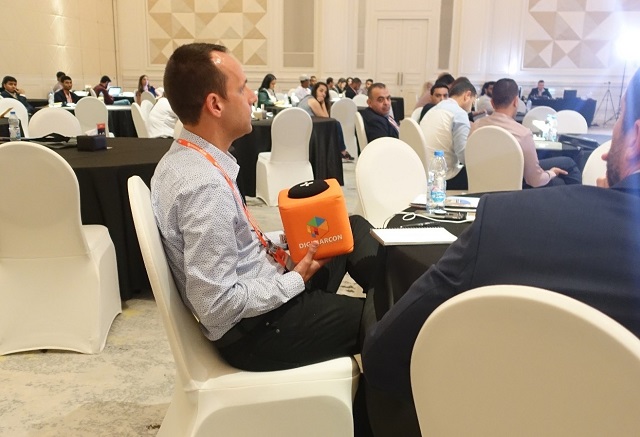
At DigiMarCon Conferences you are never ‘left in the dark’…. literally, in a large room far away from the stage and speakers, crushed in tight theater seating, without even a table, while sitting in the dark. At DigiMarCon all delegates have premium meeting space in luxurious ballroom well-lit spaces, with comfortable seating with table enabling delegates to use their laptop to take notes with ample charging facilities onsite in a comfortable space to learn and thrive. All tables are situated close with direct view of the stage.

Value for Money & Generous Discounts

DigiMarCon Conferences are affordable to attend, from single-day event passes up to two-day VIP options at a fraction of the cost of other industry events. We offer significant discounts for early bird registrations. Additionally, on top of time-limited discount pass rates, because budgets are tight, we want to make sure all groups have a chance to attend DigiMarCon. For government employees, students, academic, startups, non-profit organizations and teams, we offer generous discounts off the prevailing registration price.

Collaborative Learning & Audience Participation

Attend DigiMarCon and you become part of the show! DigiMarCon Conferences tap into the talent of the room, drawing from the knowledge and experience of the professionals in the audience. All DigiMarCon events include regular interactive question and answer sessions with speakers and the audience ideal for collaboration, audience polls, along with ice-breaker and group exercises, steered by charismatic Emcees.

Meet the Speakers in Person

DigiMarCon Conferences put you right up and close with the speakers giving you the opportunity to meet these social media influencers which you follow in person. Speakers are never hidden in private speaker rooms away from the audience, they are in the auditorium sitting right beside you and participating.

Exceptional Customer Service

Attending a conference is a well-researched decision. There are many factors to consider such as location, time, venue, cost, speakers, content, etc. At DigiMarCon our results-obsessed Customer Service team are at your service before, during and after the event to help with your needs. It’s at the core of what we do — it drives our business. Offsite, we are ready to assist you via phone, ticket or chat. Onsite at our Conferences, friendly DigiMarCon staff serve as your hosts. They welcome your input and are happy to assist you.

TECHSPO Technology Expo

At all DigiMarCon Conferences is the co-located exclusive event TECHSPO Technology Expo, which showcases the new generation of technology and innovation, including; AdTech, MarTech, Internet, Mobile and SaaS technologies. Be inspired, amazed and educated on how these evolving technologies will impact your business for the better. Unlimited Access to TECHSPO Technology Expo is included with all DigiMarCon passes.

On Demand Library Access

DigiMarCon All Access & VIP Passes include a 12-month on demand access to hundreds of hours of DigiMarCon speaker keynotes, panels and master class presentations from recent DigiMarCon Conferences, including videos, slide decks and key takeaways, available on demand so you can watch what you want, when you want.

The Largest Digital Marketing, Media & Advertising Community

Attendees of DigiMarcon Conferences gain membership to an exclusive global Digital Marketing, Media and Advertising Community of over 500,000 worldwide subscribers to our award-winning digital marketing blog and over 100,000 members to the International Association of Digital Marketing Professionals (visit https://iadmp.org). This global community comprises of innovators, senior marketers and branders, entrepreneurs, digital executives and professionals, web & mobile strategists, designers and web project managers, business leaders, business developers, agency executives and their teams and anyone else who operates in the digital community who leverage digital, mobile, and social media marketing. We provide updates to the latest whitepapers and industry reports to keep you updated on trends, innovation and best practice digital marketing.

Safe, Clean & Hygienic Event Environment

The events industry has forever changed in a world affected by COVID-19. The health and safety of our guests, staff and community is our highest priority and paramount. The team at DigiMarCon is dedicated to ensuring a great experience at our in-person events, and that includes providing a safe, clean and hygienic environment for our delegates. Some of the key areas we have implemented safe and hygienic measures include;

  • Limiting Venue Capacities to allow for Social Distancing
  • Health and Safety Protocols
  • Safe Food and Beverages and Food-handling
  • Sanitation Stations with Hand Sanitizer and Wet Wipes Dispensers
  • Sanitation and Disinfection of Common and High-Traffic Areas
  • Physical Distancing Measures Between Attendees
  • Social Distancing Room and Seating Configurations
  • Non-Contact Thermal Temperature Scanning

Hybrid Events: Attend In-Person or Online

DigiMarCon has always been industry leaders of the Hybrid Event experience for years (a hybrid event combines a "live" in-person event with a "virtual" online component), no one needs to miss out on attending our events. Each DigiMarCon Conference can be attended in-person (with a Main Conference, All Access or VIP Pass) or online (with a Virtual Pass) giving attendees a choice for the experience they want to have. Attending virtually by viewing a Live Stream or On Demand enables participation by people who might be unable to attend physically due to travel or time zone constraints or through a wish to reduce the carbon footprint of the event. If you would like to meet the speakers, network with fellow marketing professionals at refreshment breaks, luncheons and evening receptions, check out the latest Internet, Mobile, AdTech, MarTech and SaaS technologies providers exhibiting then it is highly recommended to attend DigiMarCon in-person. As the largest Digital Marketing, Media and Advertising Conference series with events in 33 international cities worldwide, across 13 countries, there is bound to be a DigiMarCon Event near you to attend in-person if you can.

High-Profile Audience From Leading Brands

DigiMarCon Conference Series is the annual gathering of the most powerful brands and senior agency executives in your region. The Sharpest Minds And The Most Influential Decision Makers - Together for Two Days.

Who Attends Our Conferences
Brands • Agencies • Solution & Service Providers • Media Owners • Publishers • Entrepreneurs • Start-Ups • Investors • Government • Corporates • Institutes of Higher Learning

PRICE INCREASES IN
PRICE INCREASES IN: