/* Custom style for animate.css. Lines 1-17 moved to frontend/_animate.scss */ @keyframes bounce { from, 20%, 53%, 80%, to { animation-timing-function: cubic-bezier(0.215, 0.610, 0.355, 1.000); transform: translate3d(0,0,0); } 40%, 43% { animation-timing-function: cubic-bezier(0.755, 0.050, 0.855, 0.060); transform: translate3d(0, -30px, 0); } 70% { animation-timing-function: cubic-bezier(0.755, 0.050, 0.855, 0.060); transform: translate3d(0, -15px, 0); } 90% { transform: translate3d(0,-4px,0); } } .bounce { animation-name: bounce; transform-origin: center bottom; } @keyframes flash { from, 50%, to { opacity: 1; } 25%, 75% { opacity: 0; } } .flash { animation-name: flash; } /* originally authored by Nick Pettit - https://github.com/nickpettit/glide */ @keyframes pulse { from { transform: scale3d(1, 1, 1); } 50% { transform: scale3d(1.05, 1.05, 1.05); } to { transform: scale3d(1, 1, 1); } } .pulse { animation-name: pulse; } @keyframes rubberBand { from { transform: scale3d(1, 1, 1); } 30% { transform: scale3d(1.25, 0.75, 1); } 40% { transform: scale3d(0.75, 1.25, 1); } 50% { transform: scale3d(1.15, 0.85, 1); } 65% { transform: scale3d(.95, 1.05, 1); } 75% { transform: scale3d(1.05, .95, 1); } to { transform: scale3d(1, 1, 1); } } .rubberBand { animation-name: rubberBand; } @keyframes shake { from, to { transform: translate3d(0, 0, 0); } 10%, 30%, 50%, 70%, 90% { transform: translate3d(-10px, 0, 0); } 20%, 40%, 60%, 80% { transform: translate3d(10px, 0, 0); } } .shake { animation-name: shake; } @keyframes headShake { 0% { transform: translateX(0); } 6.5% { transform: translateX(-6px) rotateY(-9deg); } 18.5% { transform: translateX(5px) rotateY(7deg); } 31.5% { transform: translateX(-3px) rotateY(-5deg); } 43.5% { transform: translateX(2px) rotateY(3deg); } 50% { transform: translateX(0); } } .headShake { animation-timing-function: ease-in-out; animation-name: headShake; } @keyframes swing { 20% { transform: rotate3d(0, 0, 1, 15deg); } 40% { transform: rotate3d(0, 0, 1, -10deg); } 60% { transform: rotate3d(0, 0, 1, 5deg); } 80% { transform: rotate3d(0, 0, 1, -5deg); } to { transform: rotate3d(0, 0, 1, 0deg); } } .swing { transform-origin: top center; animation-name: swing; } @keyframes tada { from { transform: scale3d(1, 1, 1); } 10%, 20% { transform: scale3d(.9, .9, .9) rotate3d(0, 0, 1, -3deg); } 30%, 50%, 70%, 90% { transform: scale3d(1.1, 1.1, 1.1) rotate3d(0, 0, 1, 3deg); } 40%, 60%, 80% { transform: scale3d(1.1, 1.1, 1.1) rotate3d(0, 0, 1, -3deg); } to { transform: scale3d(1, 1, 1); } } .tada { animation-name: tada; } /* originally authored by Nick Pettit - https://github.com/nickpettit/glide */ @keyframes wobble { from { transform: none; } 15% { transform: translate3d(-25%, 0, 0) rotate3d(0, 0, 1, -5deg); } 30% { transform: translate3d(20%, 0, 0) rotate3d(0, 0, 1, 3deg); } 45% { transform: translate3d(-15%, 0, 0) rotate3d(0, 0, 1, -3deg); } 60% { transform: translate3d(10%, 0, 0) rotate3d(0, 0, 1, 2deg); } 75% { transform: translate3d(-5%, 0, 0) rotate3d(0, 0, 1, -1deg); } to { transform: none; } } .wobble { animation-name: wobble; } @keyframes jello { from, 11.1%, to { transform: none; } 22.2% { transform: skewX(-12.5deg) skewY(-12.5deg); } 33.3% { transform: skewX(6.25deg) skewY(6.25deg); } 44.4% { transform: skewX(-3.125deg) skewY(-3.125deg); } 55.5% { transform: skewX(1.5625deg) skewY(1.5625deg); } 66.6% { transform: skewX(-0.78125deg) skewY(-0.78125deg); } 77.7% { transform: skewX(0.390625deg) skewY(0.390625deg); } 88.8% { transform: skewX(-0.1953125deg) skewY(-0.1953125deg); } } .jello { animation-name: jello; transform-origin: center; } @keyframes bounceIn { from, 20%, 40%, 60%, 80%, to { animation-timing-function: cubic-bezier(0.215, 0.610, 0.355, 1.000); } 0% { opacity: 0; transform: scale3d(.3, .3, .3); } 20% { transform: scale3d(1.1, 1.1, 1.1); } 40% { transform: scale3d(.9, .9, .9); } 60% { opacity: 1; transform: scale3d(1.03, 1.03, 1.03); } 80% { transform: scale3d(.97, .97, .97); } to { opacity: 1; transform: scale3d(1, 1, 1); } } .bounceIn { animation-name: bounceIn; } @keyframes bounceInDown { from, 60%, 75%, 90%, to { animation-timing-function: cubic-bezier(0.215, 0.610, 0.355, 1.000); } 0% { opacity: 0; transform: translate3d(0, -3000px, 0); } 60% { opacity: 1; transform: translate3d(0, 25px, 0); } 75% { transform: translate3d(0, -10px, 0); } 90% { transform: translate3d(0, 5px, 0); } to { transform: none; } } .bounceInDown { animation-name: bounceInDown; } @keyframes bounceInLeft { from, 60%, 75%, 90%, to { animation-timing-function: cubic-bezier(0.215, 0.610, 0.355, 1.000); } 0% { opacity: 0; transform: translate3d(-3000px, 0, 0); } 60% { opacity: 1; transform: translate3d(25px, 0, 0); } 75% { transform: translate3d(-10px, 0, 0); } 90% { transform: translate3d(5px, 0, 0); } to { transform: none; } } .bounceInLeft { animation-name: bounceInLeft; } @keyframes bounceInRight { from, 60%, 75%, 90%, to { animation-timing-function: cubic-bezier(0.215, 0.610, 0.355, 1.000); } from { opacity: 0; transform: translate3d(3000px, 0, 0); } 60% { opacity: 1; transform: translate3d(-25px, 0, 0); } 75% { transform: translate3d(10px, 0, 0); } 90% { transform: translate3d(-5px, 0, 0); } to { transform: none; } } .bounceInRight { animation-name: bounceInRight; } @keyframes bounceInUp { from, 60%, 75%, 90%, to { animation-timing-function: cubic-bezier(0.215, 0.610, 0.355, 1.000); } from { opacity: 0; transform: translate3d(0, 3000px, 0); } 60% { opacity: 1; transform: translate3d(0, -20px, 0); } 75% { transform: translate3d(0, 10px, 0); } 90% { transform: translate3d(0, -5px, 0); } to { transform: translate3d(0, 0, 0); } } .bounceInUp { animation-name: bounceInUp; } @keyframes fadeIn { from { opacity: 0; } to { opacity: 1; } } .fadeIn { animation-name: fadeIn; } @keyframes fadeInDown { from { opacity: 0; transform: translate3d(0, -100%, 0); } to { opacity: 1; transform: none; } } .fadeInDown { animation-name: fadeInDown; } @keyframes fadeInLeft { from { opacity: 0; transform: translate3d(-100%, 0, 0); } to { opacity: 1; transform: none; } } .fadeInLeft { animation-name: fadeInLeft; } @keyframes fadeInRight { from { opacity: 0; transform: translate3d(100%, 0, 0); } to { opacity: 1; transform: none; } } .fadeInRight { animation-name: fadeInRight; } @keyframes fadeInUp { from { opacity: 0; transform: translate3d(0, 100%, 0); } to { opacity: 1; transform: none; } } .fadeInUp { animation-name: fadeInUp; } @keyframes lightSpeedIn { from { transform: translate3d(100%, 0, 0) skewX(-30deg); opacity: 0; } 60% { transform: skewX(20deg); opacity: 1; } 80% { transform: skewX(-5deg); opacity: 1; } to { transform: none; opacity: 1; } } .lightSpeedIn { animation-name: lightSpeedIn; animation-timing-function: ease-out; } @keyframes rotateIn { from { transform-origin: center; transform: rotate3d(0, 0, 1, -200deg); opacity: 0; } to { transform-origin: center; transform: none; opacity: 1; } } .rotateIn { animation-name: rotateIn; } @keyframes rotateInDownLeft { from { transform-origin: left bottom; transform: rotate3d(0, 0, 1, -45deg); opacity: 0; } to { transform-origin: left bottom; transform: none; opacity: 1; } } .rotateInDownLeft { animation-name: rotateInDownLeft; } @keyframes rotateInDownRight { from { transform-origin: right bottom; transform: rotate3d(0, 0, 1, 45deg); opacity: 0; } to { transform-origin: right bottom; transform: none; opacity: 1; } } .rotateInDownRight { animation-name: rotateInDownRight; } @keyframes rotateInUpLeft { from { transform-origin: left bottom; transform: rotate3d(0, 0, 1, 45deg); opacity: 0; } to { transform-origin: left bottom; transform: none; opacity: 1; } } .rotateInUpLeft { animation-name: rotateInUpLeft; } @keyframes rotateInUpRight { from { transform-origin: right bottom; transform: rotate3d(0, 0, 1, -90deg); opacity: 0; } to { transform-origin: right bottom; transform: none; opacity: 1; } } .rotateInUpRight { animation-name: rotateInUpRight; } /* originally authored by Nick Pettit - https://github.com/nickpettit/glide */ @keyframes rollIn { from { opacity: 0; transform: translate3d(-100%, 0, 0) rotate3d(0, 0, 1, -120deg); } to { opacity: 1; transform: none; } } .rollIn { animation-name: rollIn; } @keyframes zoomIn { from { opacity: 0; transform: scale3d(.3, .3, .3); } 50% { opacity: 1; } } .zoomIn { animation-name: zoomIn; } @keyframes zoomInDown { from { opacity: 0; transform: scale3d(.1, .1, .1) translate3d(0, -1000px, 0); animation-timing-function: cubic-bezier(0.550, 0.055, 0.675, 0.190); } 60% { opacity: 1; transform: scale3d(.475, .475, .475) translate3d(0, 60px, 0); animation-timing-function: cubic-bezier(0.175, 0.885, 0.320, 1); } } .zoomInDown { animation-name: zoomInDown; } @keyframes zoomInLeft { from { opacity: 0; transform: scale3d(.1, .1, .1) translate3d(-1000px, 0, 0); animation-timing-function: cubic-bezier(0.550, 0.055, 0.675, 0.190); } 60% { opacity: 1; transform: scale3d(.475, .475, .475) translate3d(10px, 0, 0); animation-timing-function: cubic-bezier(0.175, 0.885, 0.320, 1); } } .zoomInLeft { animation-name: zoomInLeft; } @keyframes zoomInRight { from { opacity: 0; transform: scale3d(.1, .1, .1) translate3d(1000px, 0, 0); animation-timing-function: cubic-bezier(0.550, 0.055, 0.675, 0.190); } 60% { opacity: 1; transform: scale3d(.475, .475, .475) translate3d(-10px, 0, 0); animation-timing-function: cubic-bezier(0.175, 0.885, 0.320, 1); } } .zoomInRight { animation-name: zoomInRight; } @keyframes zoomInUp { from { opacity: 0; transform: scale3d(.1, .1, .1) translate3d(0, 1000px, 0); animation-timing-function: cubic-bezier(0.550, 0.055, 0.675, 0.190); } 60% { opacity: 1; transform: scale3d(.475, .475, .475) translate3d(0, -60px, 0); animation-timing-function: cubic-bezier(0.175, 0.885, 0.320, 1); } } .zoomInUp { animation-name: zoomInUp; } @keyframes slideInDown { from { transform: translate3d(0, -100%, 0); visibility: visible; } to { transform: translate3d(0, 0, 0); } } .slideInDown { animation-name: slideInDown; } @keyframes slideInLeft { from { transform: translate3d(-100%, 0, 0); visibility: visible; } to { transform: translate3d(0, 0, 0); } } .slideInLeft { animation-name: slideInLeft; } @keyframes slideInRight { from { transform: translate3d(100%, 0, 0); visibility: visible; } to { transform: translate3d(0, 0, 0); } } .slideInRight { animation-name: slideInRight; } @keyframes slideInUp { from { transform: translate3d(0, 100%, 0); visibility: visible; } to { transform: translate3d(0, 0, 0); } } .slideInUp { animation-name: slideInUp; } {"content":[{"id":"8e94176","elType":"section","settings":{"content_width":{"unit":"px","size":740},"gap":"wider","custom_height":{"unit":"vh","size":100},"content_position":"middle","background_background":"video","background_video_link":"https:\/\/youtu.be\/DsYNaw4qoJw","background_overlay_background":"classic","background_overlay_color":"#000000","background_overlay_color_b":"#9d56c9","background_overlay_gradient_angle":{"unit":"deg","size":270},"padding":{"unit":"px","top":"0","right":"0","bottom":"0","left":"0","isLinked":false},"background_overlay_opacity":{"unit":"px","size":0.29},"height":"min-height","custom_height_mobile":{"unit":"vh","size":100},"background_video_fallback":{"url":"https:\/\/library.elementor.com\/wp-content\/uploads\/2018\/05\/background-Fallback-404.1.jpg","id":8572}},"elements":[{"id":"6e18aaf6","elType":"column","settings":{"_column_size":100,"_inline_size":null,"padding_mobile":{"unit":"px","top":"15","right":"15","bottom":"15","left":"15","isLinked":true}},"elements":[{"id":"36333044","elType":"widget","settings":{"title":"404","header_size":"p","align":"center","title_color":"#ffffff","typography_typography":"custom","typography_font_size":{"unit":"px","size":249},"typography_font_weight":"bold","typography_font_size_tablet":{"unit":"px","size":200},"typography_font_size_mobile":{"unit":"px","size":160}},"elements":[],"widgetType":"heading"},{"id":"737f2c7b","elType":"widget","settings":{"title":"The page you were looking for couldn't be found","header_size":"h3","align":"center","title_color":"#ffffff","typography_typography":"custom","typography_font_size":{"unit":"px","size":39},"typography_font_weight":"300","typography_text_transform":"capitalize","typography_font_size_tablet":{"unit":"px","size":40},"typography_font_size_mobile":{"unit":"px","size":20},"typography_line_height_tablet":{"unit":"px","size":50},"typography_line_height_mobile":{"unit":"px","size":25}},"elements":[],"widgetType":"heading"},{"id":"7fe5f44","elType":"widget","settings":{"icon":"fa fa-font-awesome","primary_color":"#ffffff","_margin":{"unit":"px","top":"60","right":"0","bottom":"60","left":"0","isLinked":false},"size":{"unit":"px","size":60},"_margin_mobile":{"unit":"px","top":"25","right":"0","bottom":"25","left":"0","isLinked":false}},"elements":[],"widgetType":"icon"},{"id":"62b0497c","elType":"widget","settings":{"icon_list":[{"text":"Home Page","icon":"fa fa-angle-right","_id":"f9100b7","link":{"url":"","is_external":"","nofollow":""}},{"text":"Services","icon":"fa fa-angle-right","_id":"6e554ae","link":{"url":"","is_external":"","nofollow":""}},{"text":"About","icon":"fa fa-angle-right","_id":"0816417","link":{"url":"","is_external":"","nofollow":""}},{"text":"Blog","icon":"fa fa-angle-right","_id":"d8c317a","link":{"url":"","is_external":"","nofollow":""}},{"text":"Contact Us","icon":"fa fa-angle-right","_id":"123a835","link":{"url":"","is_external":"","nofollow":""}}],"space_between":{"unit":"px","size":13},"icon_color":"#ffffff","text_indent":{"unit":"px","size":10},"icon_typography_typography":"custom","icon_typography_font_size":{"unit":"px","size":16},"_margin":{"unit":"px","top":"30","right":"0","bottom":"0","left":"0","isLinked":false},"view":"inline","icon_align":"center","text_color":"#ffffff","icon_typography_font_weight":"500","icon_typography_text_transform":"uppercase","icon_typography_font_size_tablet":{"unit":"px","size":16},"icon_typography_font_size_mobile":{"unit":"px","size":14},"icon_typography_line_height_mobile":{"unit":"px","size":29}},"elements":[],"widgetType":"icon-list"}],"isInner":false}],"isInner":false}],"page_settings":[]} DigiMarCon Latam- Digital Marketing, Media and Advertising Conference & ExhibitionAufregende Kaskaden der Gewinnchancen BGaming’s Plinko mit bis zu 1000-fachem Multiplikator und anpa
 
Miami, FL
HYATT REGENCY MIAMI
JUNE 16 - 17, 2025
 
DOWNLOAD BROCHURE

Aufregende Kaskaden der Gewinnchancen BGaming’s Plinko mit bis zu 1000-fachem Multiplikator und anpa

November 14, 2025
Roy Pepito

Aufregende Kaskaden der Gewinnchancen: BGaming’s Plinko mit bis zu 1000-fachem Multiplikator und anpassbarem Risiko verspricht Nervenkitzel pur.

Die Welt der Online-Casinos entwickelt sich ständig weiter und bietet Spielern immer wieder neue und aufregende Möglichkeiten, ihr Glück zu versuchen. Ein Spiel, das in den letzten Jahren immer beliebter geworden ist, ist Plinko, ein charmantes und unterhaltsames Casual-Spiel des renommierten Entwicklers BGaming. Mit seinem einfachen, aber fesselnden Gameplay und dem Potenzial für hohe Gewinne zieht Plinko sowohl Gelegenheitsspieler als auch erfahrene Casino-Enthusiasten in seinen Bann. Der hohe RTP-Wert von 99% und ein maximaler Multiplikator von bis zu x1000 machen es zu einem äußerst attraktiven Spiel für alle, die Nervenkitzel und potenziell lukrative Auszahlungen suchen.

Dieses Spiel besticht durch seine einzigartige Mechanik: Ein Ball wird von der Spitze einer Pyramide fallen gelassen und prallt dabei zufällig durch verschiedene Zellen am unteren Ende. Jede Zelle ist mit einem bestimmten Gewinnwert versehen, der sich von links nach rechts erhöht. Spieler können aus verschiedenen Risikostufen wählen (niedrig, normal, hoch) und die Anzahl der Linien anpassen, wodurch sich ihre Gewinnchancen und möglichen Auszahlungen beeinflussen lassen. Durch die Auswahl zwischen manuellen und automatischen Spielmodi kann das Spiel an die individuellen Bedürfnisse und Vorlieben angepasst werden. Wir werden diese faszinierende Spielmechanik und die zahlreichen Optionen, die Plinko bietet, im Folgenden genauer untersuchen.

Das Prinzip von Plinko: So funktioniert das Spiel

Plinko ist ein Spiel, das auf dem Prinzip der Schwerkraft und des Glücks basiert. Ein Ball wird von oben in ein Spielfeld mit einer pyramidenförmigen Anordnung von Stiften fallen gelassen. Während der Ball nach unten prallt, trifft er auf diese Stifte und verändert seine Richtung. Am unteren Ende des Spielfelds befinden sich verschiedene Zellen, die unterschiedliche Gewinnwerte repräsentieren. Der Wert der Zelle, in der der Ball landet, bestimmt den Gewinn des Spielers. Die Spannung besteht darin, nicht vorhersehen zu können, wo der Ball landet, da der Verlauf durch eine Kombination aus physikalischen Gesetzen und Zufall bestimmt wird. Spieler können ihre Strategie durch die Wahl des Risikolevels und der Anzahl der Linien beeinflussen. Niedrigeres Risiko bedeutet kleinere, aber häufigere Gewinne, während höheres Risiko potenziell größere Auszahlungen ermöglicht, aber auch mit einem höheren Verlustrisiko verbunden ist.

Die Anzahl der Linien bestimmt, wie viele verschiedene Wege der Ball nehmen kann, um am unteren Ende des Spielfelds anzukommen. Mehr Linien erhöhen die Wahrscheinlichkeit, einen höheren Gewinn zu erzielen, da der Ball mehr Möglichkeiten hat, in eine wertvolle Zelle zu fallen. Allerdings erhöhen mehr Linien auch den Gesamteinsatz pro Spielrunde. Das Spiel bietet sowohl einen manuellen Modus, bei dem der Spieler jeden Wurf selbst auslöst, als auch einen automatischen Modus, der es ermöglicht, eine bestimmte Anzahl von Würfen ohne manuelles Eingreifen durchzuführen. Diese Funktion ist besonders für Spieler nützlich, die eine bestimmte Strategie testen oder längere Spielsitzungen genießen möchten.

Um das Verständnis weiter zu vertiefen, betrachten wir die folgenden möglichen Auszahlungen basierend auf Risiko und Anzahl der Linien:

Risiko
Anzahl Linien
Minimaler Einsatz
Maximaler Multiplikator
Niedrig 8 0,10 € x20
Normal 12 0,20 € x50
Hoch 16 0,50 € x1000

Risikostufen und deren Einfluss auf die Gewinnchancen

Die Auswahl der Risikostufe ist ein wesentlicher Bestandteil der Plinko-Strategie. Niedriges Risiko bietet stabile, aber geringere Gewinne. Es ist ideal für Spieler, die ihre Einsätze über einen längeren Zeitraum strecken und das Spiel risikoarm genießen möchten. Mittleres Risiko stellt einen Kompromiss zwischen Gewinnchancen und potenziellem Verlust dar. Es ermöglicht regelmäßige Auszahlungen mit moderaten Multiplikatoren. Hohes Risiko dagegen lockt mit der Aussicht auf extrem hohe Gewinne, birgt aber auch ein erhebliches Verlustrisiko. Diese Option ist eher für erfahrene Spieler geeignet, die bereit sind, größere Einsätze zu tätigen, um die Chance auf einen großen Gewinn zu haben.

Es ist wichtig zu beachten, dass der RTP (Return to Player) von Plinko bei 99% liegt, was zu den höchsten Werten in der Online-Casino-Welt gehört. Dies bedeutet, dass die theoretische Auszahlungsquote des Spiels sehr hoch ist und Spieler langfristig gute Gewinnchancen haben. Allerdings bedeutet dies nicht, dass jeder Spieler bei jeder Spielrunde gewinnt. Zufall spielt eine entscheidende Rolle, und es kann durchaus vorkommen, dass man zwischenzeitlich Verluste erleidet. Eine verantwortungsvolle Spielweise und die Festlegung eines Budgets sind daher unerlässlich.

Hier ein Überblick über die typischen Auszahlungen, die bei den verschiedenen Risikostufen zu erwarten sind:

  • Niedriges Risiko: Häufige, kleine Gewinne (z.B. 0,2x bis 5x Einsatz).
  • Mittleres Risiko: Regelmäßige Gewinne mit moderaten Multiplikatoren (z.B. 5x bis 20x Einsatz).
  • Hohes Risiko: Seltene, aber potenziell sehr hohe Gewinne (z.B. 20x bis 1000x Einsatz).

Die Anzahl der Linien und ihre Auswirkungen auf den Einsatz

Die Anzahl der Linien, die ein Spieler bei Plinko auswählt, beeinflusst direkt den Gesamteinsatz und die potenziellen Gewinnchancen. Je mehr Linien aktiviert sind, desto größer ist der Einsatz pro Spielrunde, aber auch die Wahrscheinlichkeit, einen Gewinn zu erzielen. Die optimale Anzahl der Linien hängt von der Spielstrategie und dem Risikobereitschaft des Spielers ab. Spieler, die ein geringeres Risiko eingehen möchten, können weniger Linien wählen, um ihren Einsatz zu reduzieren. Spieler, die höhere Gewinne anstreben, können mehr Linien aktivieren, um ihre Gewinnchancen zu erhöhen.

Die Beziehung zwischen Anzahl der Linien und Einsatz ist linear. Wenn der Spieler beispielsweise einen Einsatz von 1 € tätigt und 10 Linien aktiviert, beträgt der Gesamteinsatz 10 €. Wenn er stattdessen 16 Linien aktiviert, beträgt der Gesamteinsatz 16 €. Es ist wichtig, das eigene Budget im Auge zu behalten und die Anzahl der Linien entsprechend anzupassen, um langfristig spielen zu können. Das Spiel bietet eine intuitive Benutzeroberfläche, die es den Spielern ermöglicht, die Anzahl der Linien einfach und bequem zu ändern.

Die folgenden Optionen sind in der Regel verfügbar:

  1. 8 Linien: Ideal für Spieler mit kleinem Budget und geringem Risiko.
  2. 12 Linien: Ein guter Kompromiss zwischen Einsatz und Gewinnchancen.
  3. 16 Linien: Für Spieler, die bereit sind, höhere Einsätze zu tätigen, um die Chance auf einen großen Gewinn zu erhöhen.

Manuelles vs. Automatisches Spiel: Welche Option ist die richtige?

Plinko bietet zwei Spielmodi an: den manuellen Modus und den automatischen Modus. Der manuelle Modus ermöglicht es dem Spieler, jeden Wurf selbst auszulösen. Dies gibt dem Spieler die volle Kontrolle über das Spieltempo und die Möglichkeit, seine Strategie bei jedem Wurf anzupassen. Der manuelle Modus ist ideal für Spieler, die das Spiel in vollen Zügen genießen und jeden Moment bewusst erleben möchten.

Der automatische Modus hingegen ermöglicht es dem Spieler, eine bestimmte Anzahl von Würfen ohne manuelles Eingreifen durchzuführen. Dies ist besonders nützlich für Spieler, die eine bestimmte Strategie testen oder längere Spielsitzungen genießen möchten, ohne ständig den Bildschirm beobachten zu müssen. Im automatischen Modus können Spieler in der Regel auch Verluststopps und Gewinnziele festlegen, um ihr Spielbudget zu schützen. Dies ermöglicht eine verantwortungsvolle Spielweise und verhindert, dass Spieler mehr Geld einsetzen, als sie sich leisten können zu verlieren.

Um die Unterschiede nochmals übersichtlich zu darstellen, hier eine kleine Vergleichstabelle:

Merkmal
Manueller Modus
Automatischer Modus
Kontrolle Volle Kontrolle über jeden Wurf Keine manuelle Eingabe erforderlich
Spieltempo Spielerbestimmt Vorgegeben (Anzahl der Würfe)
Strategieanpassung Möglich bei jedem Wurf Nicht möglich während der automatischen Spielrunde
Verluststopp/Gewinnziel Nicht verfügbar Einstellbar

Tipps und Strategien für erfolgreiches Plinko-Spiel

Obwohl Plinko in erster Linie ein Glücksspiel ist, gibt es einige Tipps und Strategien, die die Gewinnchancen erhöhen können. Eine wichtige Strategie ist es, mit kleineren Einsätzen zu beginnen und die Risikostufe schrittweise zu erhöhen, sobald man ein Gefühl für das Spiel entwickelt hat. Es ist auch ratsam, die Anzahl der Linien sorgfältig auszuwählen und sie an das eigene Budget und die Risikobereitschaft anzupassen. Spieler, die ein geringeres Risiko eingehen möchten, sollten weniger Linien wählen, während Spieler, die höhere Gewinne anstreben, mehr Linien aktivieren können.

Eine weitere nützliche Strategie ist es, das automatische Spiel mit Verluststopps und Gewinnzielen zu nutzen. Dies hilft, das Spielbudget zu schützen und verantwortungsvoll zu spielen. Es ist wichtig, sich bewusst zu sein, dass Plinko ein Glücksspiel ist und es keine Garantie für Gewinne gibt. Allerdings kann eine durchdachte Strategie und eine verantwortungsvolle Spielweise die Gewinnchancen verbessern und das Spielerlebnis angenehmer gestalten. Denken Sie daran, dass der hohe RTP-Wert von 99% Plinko zu einem Spiel mit überdurchschnittlichen Gewinnchancen macht, aber langfristiger Erfolg nur durch Disziplin und strategisches Vorgehen erreicht werden kann.

No comments

You must be logged in to post a comment.

GET YOUR FREE DIGIMARCON BROCHURE AND
NEVER MISS AN UPDATE

Sign up for email updates and get your the FREE DigiMarCon Miami brochure and stay in the know about all things DigiMarCon including price changes, discounts, and the latest speakers added to the schedule.

The DigiMarCon Difference

Business and marketing professionals have a lot of choice in events to attend.
As the Premier Digital Marketing, Media and Advertising Conference & Exhibition Series worldwide
see why DigiMarCon stands out above the rest in the marketing industry
and why delegates keep returning year after year

Global Event Series

DigiMarCon is the Largest Digital Marketing, Media and Advertising Conference & Exhibition series in the world, with annual events held in all continents (North America, Latin America, Europe, UK, Asia Pacific, Middle East and Africa) in 13 countries (United States, Canada, Australia, New Zealand, United Kingdom, Ireland, Netherlands, Spain, Brazil, Singapore, India, United Arab Emirates and South Africa), across 33 cities (New York, Philadelphia, Boston, Toronto, Vancouver, Montreal, Houston, Dallas, Chicago, Los Angeles, San Francisco, Seattle, Washington DC, New Orleans, Atlanta, Detroit, Miami, Denver, San Diego, Phoenix, Las Vegas, Honolulu, London, Dublin, Amsterdam, Barcelona, Johannesburg, Cape Town, Dubai, Sydney, Auckland, Singapore and Sao Paulo). All DigiMarCon Events can be attended in-person or online. Wherever you are located there is a regional DigiMarCon event nearby you can attend.

5-Star Luxury Event Venues

DigiMarCon Conferences are held in top luxury 5-star event venues across the world such as; Royal Caribbean Cruise Ships, Olympic Stadiums, Marina Bay Sands Expo & Convention Centre and Wynn, JW Marriott, Marriott Marquis, Hyatt Regency, InterContinental, The Westin, Renaissance, Hilton, Conrad, W, Sheraton, Loews and Sofitel Hotel properties. Discount hotel room rates at each venue hotel means no hassle getting to and from the venue each day.

Extensive & Memorable Networking Experiences

Building relationships matter! At DigiMarCon Conferences we have more networking breaks on our program than others. On average there are 8 Networking breaks at each event giving delegates ample opportunities in a relaxed atmosphere to meet others over the 2-days at the event; from 1-hour round table networking luncheons to 3-hour dinner receptions. These networking breaks are set in picturesque locations to facilitate memorable experiences while fostering new relationships. Such experiences include enjoying cocktails and the Sunset over the Pacific Ocean on a private Ocean Terrace in Santa Monica, to being on the Sydney Olympic Stadium playing arena at night enjoying cocktails under the lights, to dining at the 360 Revolving Restaurant at the top of the CN Tower in Toronto for a Dinner Reception, enjoying cocktails on a private promenade overlooking Times Square in New York City, or having fun at the Dazzles Night Club onboard the Royal Caribbean Oasis of the Seas for a Farewell Party, etc.

Industry Thought Leaders from Leading Brands

DigiMarCon Keynotes, Panels and Master Classes are facilitated by the foremost thought leaders in the industry, from celebrity social media influencers to CMO’s from the largest Fortune 500 company brands that are disrupting the digital marketing, media and advertising industry, such as Google, Facebook, Microsoft, Amazon, Oracle, Adobe, eBay, Netflix and more. All presentations are pitch-free, and include actionable takeaways, case studies, strategies and tactics, ready to be applied when back in the office.

Premium Comfortable Meeting Spaces

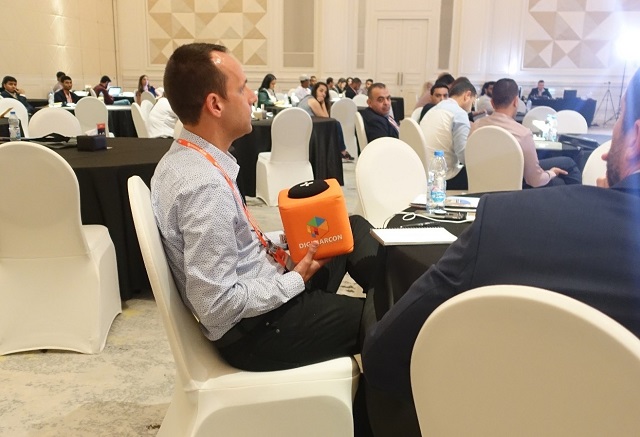
At DigiMarCon Conferences you are never ‘left in the dark’…. literally, in a large room far away from the stage and speakers, crushed in tight theater seating, without even a table, while sitting in the dark. At DigiMarCon all delegates have premium meeting space in luxurious ballroom well-lit spaces, with comfortable seating with table enabling delegates to use their laptop to take notes with ample charging facilities onsite in a comfortable space to learn and thrive. All tables are situated close with direct view of the stage.

Value for Money & Generous Discounts

DigiMarCon Conferences are affordable to attend, from single-day event passes up to two-day VIP options at a fraction of the cost of other industry events. We offer significant discounts for early bird registrations. Additionally, on top of time-limited discount pass rates, because budgets are tight, we want to make sure all groups have a chance to attend DigiMarCon. For government employees, students, academic, startups, non-profit organizations and teams, we offer generous discounts off the prevailing registration price.

Collaborative Learning & Audience Participation

Attend DigiMarCon and you become part of the show! DigiMarCon Conferences tap into the talent of the room, drawing from the knowledge and experience of the professionals in the audience. All DigiMarCon events include regular interactive question and answer sessions with speakers and the audience ideal for collaboration, audience polls, along with ice-breaker and group exercises, steered by charismatic Emcees.

Meet the Speakers in Person

DigiMarCon Conferences put you right up and close with the speakers giving you the opportunity to meet these social media influencers which you follow in person. Speakers are never hidden in private speaker rooms away from the audience, they are in the auditorium sitting right beside you and participating.

Exceptional Customer Service

Attending a conference is a well-researched decision. There are many factors to consider such as location, time, venue, cost, speakers, content, etc. At DigiMarCon our results-obsessed Customer Service team are at your service before, during and after the event to help with your needs. It’s at the core of what we do — it drives our business. Offsite, we are ready to assist you via phone, ticket or chat. Onsite at our Conferences, friendly DigiMarCon staff serve as your hosts. They welcome your input and are happy to assist you.

TECHSPO Technology Expo

At all DigiMarCon Conferences is the co-located exclusive event TECHSPO Technology Expo, which showcases the new generation of technology and innovation, including; AdTech, MarTech, Internet, Mobile and SaaS technologies. Be inspired, amazed and educated on how these evolving technologies will impact your business for the better. Unlimited Access to TECHSPO Technology Expo is included with all DigiMarCon passes.

On Demand Library Access

DigiMarCon All Access & VIP Passes include a 12-month on demand access to hundreds of hours of DigiMarCon speaker keynotes, panels and master class presentations from recent DigiMarCon Conferences, including videos, slide decks and key takeaways, available on demand so you can watch what you want, when you want.

The Largest Digital Marketing, Media & Advertising Community

Attendees of DigiMarcon Conferences gain membership to an exclusive global Digital Marketing, Media and Advertising Community of over 500,000 worldwide subscribers to our award-winning digital marketing blog and over 100,000 members to the International Association of Digital Marketing Professionals (visit https://iadmp.org). This global community comprises of innovators, senior marketers and branders, entrepreneurs, digital executives and professionals, web & mobile strategists, designers and web project managers, business leaders, business developers, agency executives and their teams and anyone else who operates in the digital community who leverage digital, mobile, and social media marketing. We provide updates to the latest whitepapers and industry reports to keep you updated on trends, innovation and best practice digital marketing.

Safe, Clean & Hygienic Event Environment

The events industry has forever changed in a world affected by COVID-19. The health and safety of our guests, staff and community is our highest priority and paramount. The team at DigiMarCon is dedicated to ensuring a great experience at our in-person events, and that includes providing a safe, clean and hygienic environment for our delegates. Some of the key areas we have implemented safe and hygienic measures include;

  • Limiting Venue Capacities to allow for Social Distancing
  • Health and Safety Protocols
  • Safe Food and Beverages and Food-handling
  • Sanitation Stations with Hand Sanitizer and Wet Wipes Dispensers
  • Sanitation and Disinfection of Common and High-Traffic Areas
  • Physical Distancing Measures Between Attendees
  • Social Distancing Room and Seating Configurations
  • Non-Contact Thermal Temperature Scanning

Hybrid Events: Attend In-Person or Online

DigiMarCon has always been industry leaders of the Hybrid Event experience for years (a hybrid event combines a "live" in-person event with a "virtual" online component), no one needs to miss out on attending our events. Each DigiMarCon Conference can be attended in-person (with a Main Conference, All Access or VIP Pass) or online (with a Virtual Pass) giving attendees a choice for the experience they want to have. Attending virtually by viewing a Live Stream or On Demand enables participation by people who might be unable to attend physically due to travel or time zone constraints or through a wish to reduce the carbon footprint of the event. If you would like to meet the speakers, network with fellow marketing professionals at refreshment breaks, luncheons and evening receptions, check out the latest Internet, Mobile, AdTech, MarTech and SaaS technologies providers exhibiting then it is highly recommended to attend DigiMarCon in-person. As the largest Digital Marketing, Media and Advertising Conference series with events in 33 international cities worldwide, across 13 countries, there is bound to be a DigiMarCon Event near you to attend in-person if you can.

High-Profile Audience From Leading Brands

DigiMarCon Conference Series is the annual gathering of the most powerful brands and senior agency executives in your region. The Sharpest Minds And The Most Influential Decision Makers - Together for Two Days.

Who Attends Our Conferences
Brands • Agencies • Solution & Service Providers • Media Owners • Publishers • Entrepreneurs • Start-Ups • Investors • Government • Corporates • Institutes of Higher Learning

PRICE INCREASES IN
PRICE INCREASES IN: